






MusicGPT is a modular AI music platform. It turns prompts, lyrics, and uploaded audio into songs, sound effects, speech, and stems through separate modules rather than a single song button. This musicgpt review reads the vendor's own materials alongside this year's independent write-ups.
The short answer is that the MusicGPT AI music generator is a flexible, credit-based workspace with a real generation API. Its vocal and song-structure quality trails Suno, its per-track length is shorter, and its headline specs disagree across public sources. The pages below cover what each module does, what the plans and credit system cost in practice, where the structural limits sit, and how it lines up against Suno and Udio before you commit credits.
What the MusicGPT AI Music Generator Is
The MusicGPT AI music generator is a browser and API product positioned as a modular music workstation. Our review of the public pages found the core idea is a set of independent modules you combine. A generator makes music and sound effects, a text-to-speech voice, an Add Vocals module, and a Replace module that swaps part of a track. Remix and Extend tools plus file upload round out the stack.
When searchers browse the AI Music Generator category, MusicGPT is one of the names they meet. Its centre of gravity is the module stack rather than one-click output. The vendor frames the current generation as its V6 line, which it describes as covering stems, inpainting, remix, sound effects, lyrics, vocals, and commercial rights on paid plans. The Suno Music Generator Review is the read on the one-button rival this platform is often measured against.
How It Works in Practice
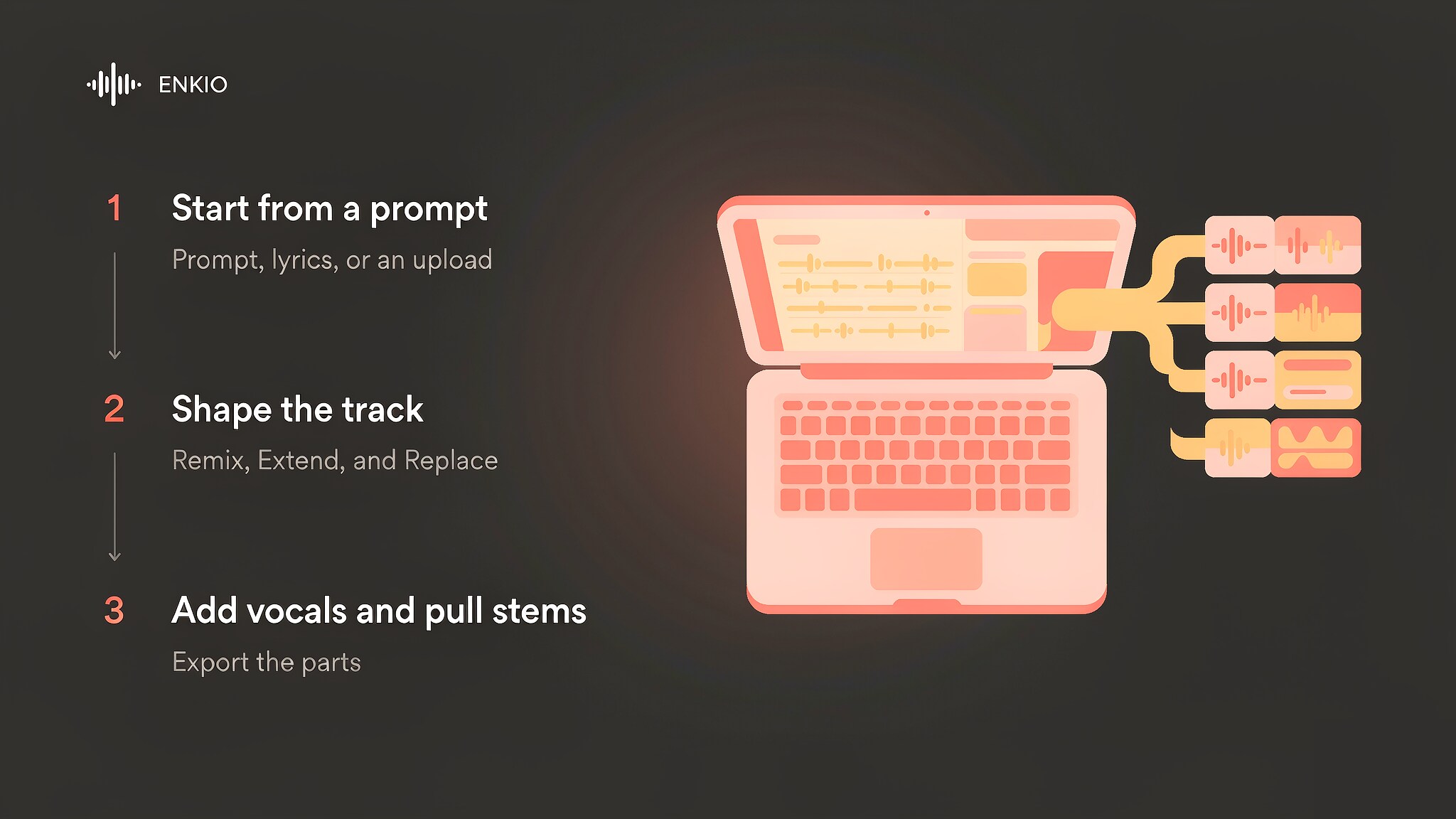
The workflow spans several modules, and most of the effort sits in picking which module to use. We read the official documentation and found the path from idea to finished asset fits in four steps.
Start from a prompt, lyrics, or an upload
A generation begins from a text prompt, your own lyrics, or an audio file you upload. The music generator returns a full track with a vocal when the brief calls for one. There is also a sound-generator module for effects and a text-to-speech module for spoken lines. The entry point is wider than a song box.
Shape the track with Remix, Extend, and Replace
Once a first pass exists, Remix adjusts the arrangement and Extend lengthens it. The standalone Replace module swaps a local section such as a verse or a stem without regenerating the whole song. These edits are what separate MusicGPT from one-shot generators that hand you a single fixed file.
Add vocals and pull stems
The Add Vocals module lays a sung or spoken line over an existing bed. The platform separates stems so you can export the parts. The vendor states paid plans include commercial use and a 30-day refund where usage stays under 10 percent. We note that as a terms point rather than a quality claim.
Generate in parallel up to the plan cap
The top Ultra plan allows up to sixteen parallel generations at once. A music generation API exposes the same engine to developers who want generation inside their own product. That is the piece built to live outside the browser rather than only within it.
What the MusicGPT AI Music Generator Gets Right
Several strengths held up when we read the official docs and set them against this year's independent tests. Our comparison with the one-button leaders is the basis for the claims below.
A modular workspace instead of one button
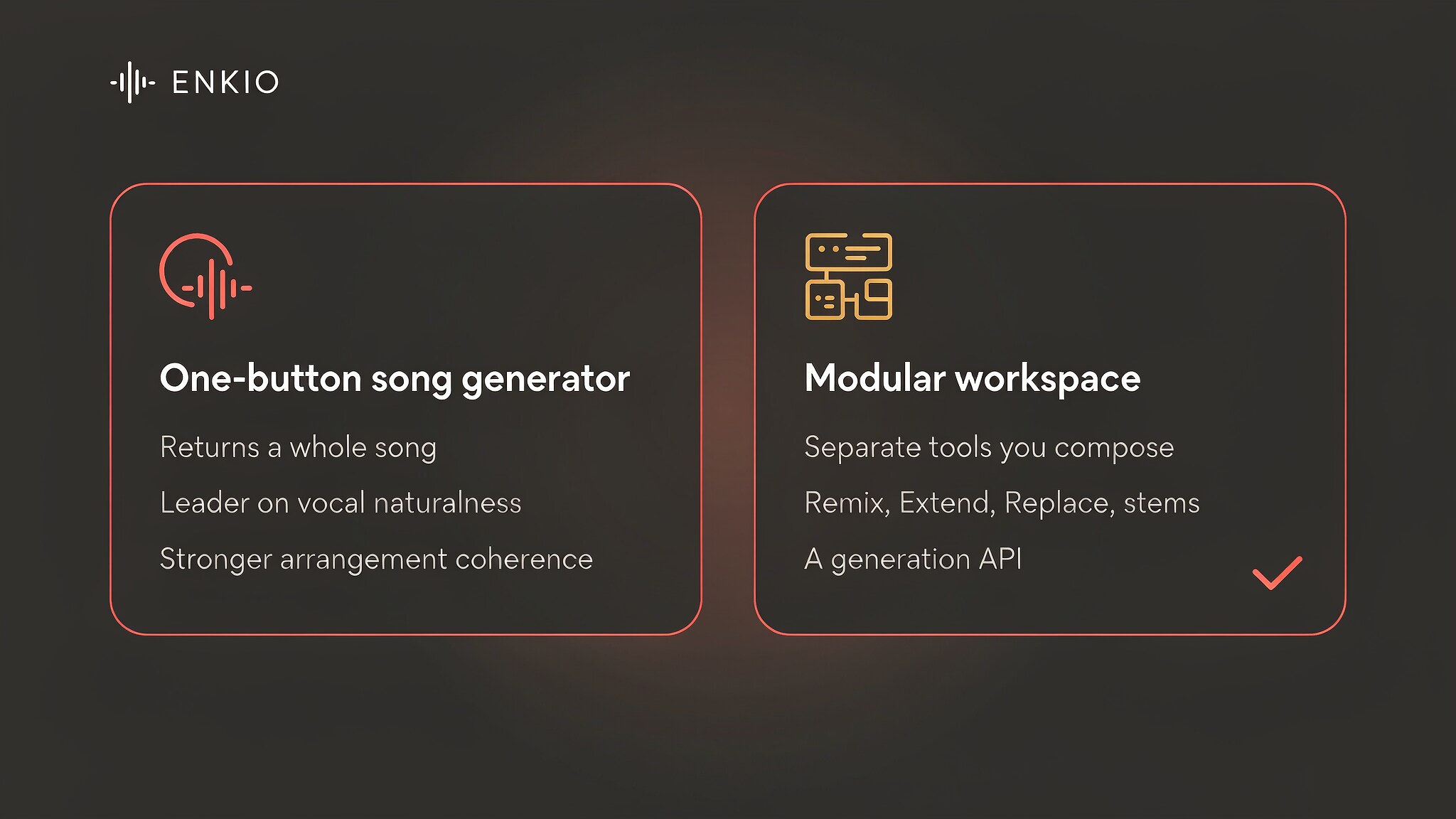
The clearest difference from Suno and Udio is the module stack. Remix, Extend, Replace, a sound generator, text-to-speech, Add Vocals, and file upload sit as separate tools you compose. For a creator who already has a bed and wants to swap one section, that separation is more useful than a tool that only returns a whole song.
A generation API for developers
MusicGPT documents a generation API that puts the same engine behind an endpoint. A team can build song and sound generation into an app rather than running it by hand in the browser. The Udio AI Music Generator Review shows how a rival with thinner developer access handles the same job. The musicgpt api is the part built to live inside other products rather than only in the browser.
Commercial terms on paid plans and a refund window
The vendor states that paid tiers include commercial use with no regional restriction. It offers a 30-day refund where usage stays under 10 percent, which independent reviews repeat as a reason the paid plans read as safer for client work. That is a terms position, not an audio-quality claim, and we treat it as one factor among several.
Stems and inpainting without leaving the tool
Most generators stop at one file, while MusicGPT lets you pull stems and rewrite a section with inpainting. Independent tests note this as the part paid users tend to miss most when they try a simpler rival. The editing depth is why many reviewers place it above pure one-shot song makers.
Pricing and Credits
As of September 2026, MusicGPT lists four plans — Free, Plus, Pro, and Ultra — with monthly credit allowances that third-party reviews place in a wide range. We read the official pricing page and found the exact dollar amounts and credit caps change, so check the official pricing page for current rates before you subscribe. Independent listings quote different credit numbers.
One places the paid tiers between about 2,500 and 50,000 monthly credits. Another lists one-off credit packs of 2,500, 7,500, 16,900, and 42,069, with roughly 500 credits on signup. Treat any specific figure as a snapshot, not a fixed quote. This musicgpt pricing picture is a range rather than a single number, and the unit cost below is what matters.
The unit cost that decides value is per usable track, not per plan. Credits are spent each time you generate, whether or not you keep the result. A compare-twenty-keep-one workflow spends many more credits than the per-song rate implies. That is the part most pricing tables hide. Check the official pricing page for the current credit-to-track math before you plan a high-volume month.
Compare what a plan includes.
Enkio plans include AI music video generation, templates, and watermark-free downloads depending on your plan.
Real Limitations
The limits below are structural, and the first one changes how you should budget any high-volume work. We see the credit math as the item most worth checking before you commit.
The credit meter punishes compare-many-keep-one workflows
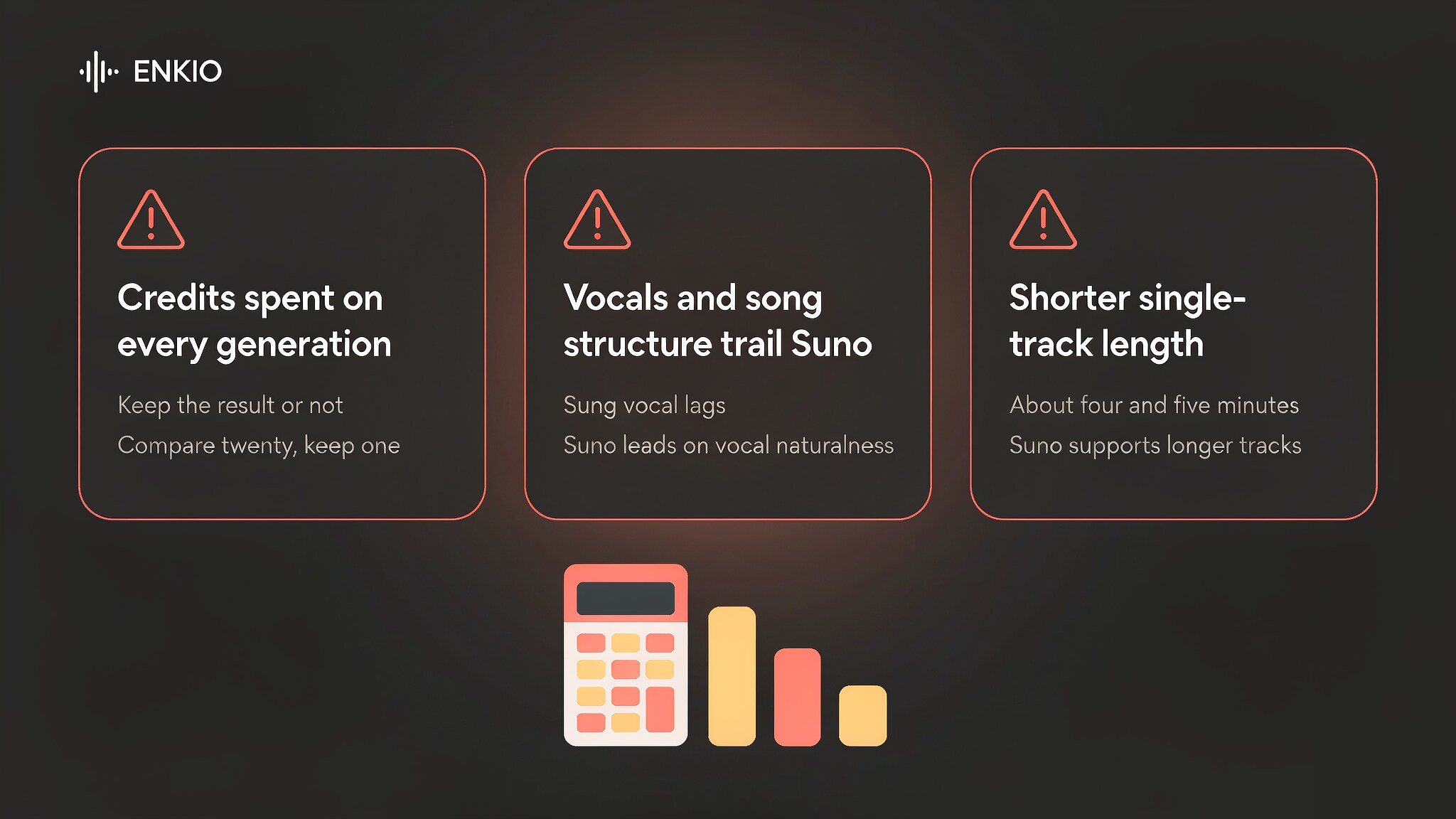
MusicGPT runs on a credit system, and every generation spends credits whether or not you keep the result. For an iteration workflow — write a brief, generate twenty variants, keep the one that lands — the cost scales with the attempts, not the output. A single finished track can quietly consume a plan's monthly allowance.
That ceiling matters most when your process is exploratory rather than decisive. If your next step is turning a finished track into a publishable video, Enkio's AI Music Video Generator takes the audio plus a visual direction and returns a music video in 720p and 1080p across five aspect ratios, on credit-based plans with the current credit costs listed on its pricing page. For commercial usage terms, see Enkio's Terms of Use.
Vocals and song structure trail Suno
Independent reviews are consistent that the sung vocal and the overall song structure lag Suno. The reviewers frame Suno as the category leader on vocal naturalness and arrangement coherence. This is a quality-position statement from third parties, not a defect claim. It matters most if the deliverable is a song built around a voice rather than a bed or an effect.
Shorter single-track length than Suno
Paid tiers cap a single track between about four and five minutes, though sources disagree on the exact ceiling. Suno supports longer single tracks, and public reviews place its per-song limit around eight minutes on paid plans. For a short hook the gap is minor, but a long-form piece hits the MusicGPT ceiling well before Suno's.
More modules mean a wider surface to learn
The same module stack that helps power users is a learning curve for newcomers. The interface depth is broader than the one-button song tools rather than shallower. A creator who wants a song from a single prompt may find the extra steps a tax rather than a feature. The value shows up only once you know which module to reach for.
Headline specs disagree across public sources
The most consequential uncertainty is that key specs conflict between the vendor and independent directories. MusicGPT publishes API access on its own materials, while at least one independent directory lists no public API — confirm before you build on it. Track length, credit allowances, and export formats also vary by source. Any plan decision should start from the official pricing page rather than a third-party summary.
How It Compares With Suno and Udio
The nearest competitors are the two token-based leaders, and the table below is a snapshot as of September 2026. Verify specifics with each platform before you decide. The columns map where each tool makes a different promise rather than scoring quality.
| Dimension | MusicGPT | Suno | Udio |
|---|---|---|---|
| Positioning | Modular workspace, many modules | One-button song generator | One-button song generator |
| Vocals | Yes, via Add Vocals | Yes, leading naturalness | Yes |
| Song structure | Adequate, trails Suno per reviews | Strong per reviews | Strong |
| Single-track length | About 4 to 5 min paid, sources vary | About 8 min paid per reviews | Several minutes per reviews |
| Editing | Remix, Extend, Replace, stems | Basic edit by tier | Basic edit by tier |
| API | Published by vendor; one directory says none | Yes | Limited |
| Commercial use | Paid tiers, per vendor | Tiered, paid | Tiered, paid |
| Best for | Modular editing, dev access | Vocal songs | Style and extend work |
A vocal-first need is a different decision, and the Alternatives to Suno AI Music Generator guide maps the wider field beyond these two. If the goal is a video rather than a song, the AI Music Video Prompts guide is the companion read for what to build once the track exists.
Who the MusicGPT AI Music Generator Is For Right Now
Our comparison splits by job, because that is where the modules and the credit cost separate.
MusicGPT suits creators who already have a bed or a reference and want to remix, extend, replace a section, or lay a voice on top. It suits developers who need a generation API inside their own product. It also suits teams that value modular editing over one-click output. The Music Video Marketing guide is a useful companion for planning what happens to the track after it is made.
It is a weaker fit for creators who want the most natural vocal and the strongest song structure, since Suno leads there per reviews. It is also weaker for anyone who needs tracks longer than about five minutes. High-volume compare-many-keep-one workflows turn expensive under the credit meter. If your priority is modular control and developer access, this is a strong option. If your priority is the best vocal song from one prompt, read the rival reviews first.
From a MusicGPT Track to Something You Can Publish
If you already hold a finished track and a licence you understand, the next stage is usually the visual. Enkio takes the finished audio plus a visual direction and returns a music video. It outputs 720p and 1080p across five aspect ratios including 9:16 and 16:9. Instrumental beds and stem-separated tracks suit this workflow particularly well, because the picture carries the scene while the audio stays clean.
A finished song pairs with a generated video: shape the sound first, then give the audio a visual. Plans and credit costs are listed on the pricing page, so check the current numbers before planning around them. Enkio is one option when the song is done but the video is not, and its music generation also covers vocals and user-written lyrics if you want both steps in one place.
One reminder applies whichever route you take: platform policies on AI-generated content differ, and several major platforms expect disclosure when music or video is machine-generated. Check the destination platform's current guidelines before publishing, particularly if monetisation is the goal.
Make more from your MV.
Let Enkio create a complete AI music video from your song with cinematic templates.
Frequently asked questions
These are the questions we see most often about the MusicGPT AI music generator.
Is MusicGPT free to use?
Yes, there is a Free plan, and independent listings place its monthly allowance around 500 credits, though the exact figure changes. The free tier is enough to try the modules and not enough for high-volume work. Check the official pricing page for the current free limits, because third-party numbers disagree.
As of September 2026, MusicGPT lists Free, Plus, Pro, and Ultra plans. Third-party reviews place the paid credit allowances between about 2,500 and 50,000 monthly credits depending on tier. We read the official pricing page and found the dollar amounts change, so check the official pricing page for current rates before you subscribe. Treat any specific price as a snapshot rather than a quote.
Does MusicGPT have an API?
MusicGPT publishes API access on its own materials, while at least one independent directory lists no public API — confirm before you build on it. The conflict is the reason we phrase this as unconfirmed rather than settled. The official docs are the place to verify before any integration work.
Does MusicGPT generate vocals?
Yes. The Add Vocals module lays a sung or spoken line over a track, and the generator can return a full song with a vocal from a lyric or a prompt. Independent reviews note the vocal naturalness trails Suno, so a specific brief helps. Expect to generate a few versions before one lands cleanly.
How long is a MusicGPT track?
Paid tiers cap a single track between about four and five minutes, though sources disagree on the exact ceiling. Suno supports longer single tracks per public reviews. For a short hook the gap is minor, but a long-form piece hits the MusicGPT ceiling before Suno's. Check the official pricing page for the current per-tier limit.
Can I use MusicGPT music commercially?
The vendor states paid tiers include commercial use with no regional restriction and a 30-day refund where usage stays under 10 percent. Independent reviews repeat that position. It is a terms point rather than a quality claim, and for platform rules check the destination's guidelines before publishing. For commercial usage terms, see Enkio's Terms of Use.
Which site is the official MusicGPT page?
The official product is musicgpt.com, and the generator, pricing, and API all run from there. Directories and third-party pages reuse the name, so confirm that a page links back to musicgpt.com before you create an account or upload material.
Conclusion
The MusicGPT AI music generator is a modular workspace rather than a one-button song tool. Its separate modules, stems, and documented generation API make it a flexible pick for editors and developers.
The trade-offs are just as clear: a credit meter that punishes compare-many-keep-one workflows, vocals and song structure that trail Suno per independent reviews, a shorter per-track length, and headline specs that disagree across public sources. If the track is finished and the visual is the next thing on your list, Enkio takes that step from the audio you already have, without a new tool to learn.