





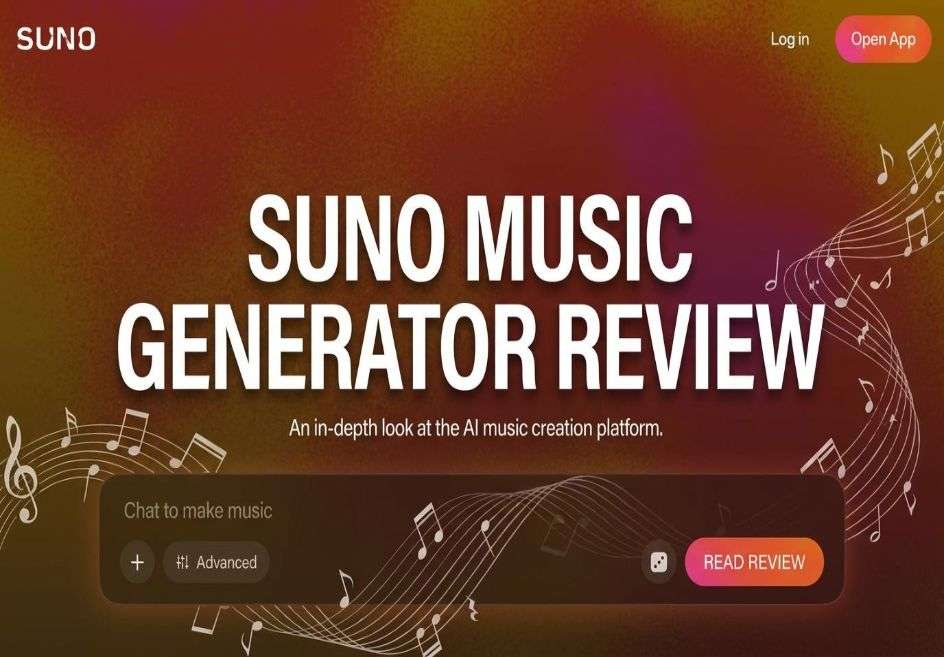
The short answer: Suno is the fastest way to turn a text idea into a complete, usable song — strong on speed, vocals, and a genuinely useful free tier; limited on note-level control, and it stops at audio, so publishing still needs a video step.
What the Suno AI Music Generator Actually Is
The Suno AI music generator, built by Suno and offered at suno.com, creates original songs from descriptions. You type what you want — a genre, a mood, a topic, or your own lyrics — hit Create, and Suno builds a full track with vocals, instrumentation, and production. From there you can regenerate, extend the song past its original length, or refine individual sections.
Three Things That Define It in Practice
Three things define the product in practice. First, it works in plain language: the official FAQ states that no music experience is needed, and that h∂olds up — "chill lo-fi beat about rainy mornings" is a valid prompt. Second, it is cross-platform: the same account works in a browser, on iOS, and on Android, so a track started on a laptop can be tweaked on a phone. Third, the company ships model updates frequently (recent versions include v4.5 and v5.5), which means output quality has moved quickly — one more reason to judge it on what it does now, not on older demos you may have heard.
What Suno Does Well
After reading through the most detailed reviews published this year and testing the claims against Suno's own documentation, four strengths come up consistently.
Speed to a Complete Song
The first is speed to a complete song. Suno does not generate a loop or a sketch — it produces a structured track with an intro, verses, a chorus, and an outro, typically in under a minute. For background music, podcast intros, or social content, that completeness matters more than perfection.
A Free Tier You Can Actually Use
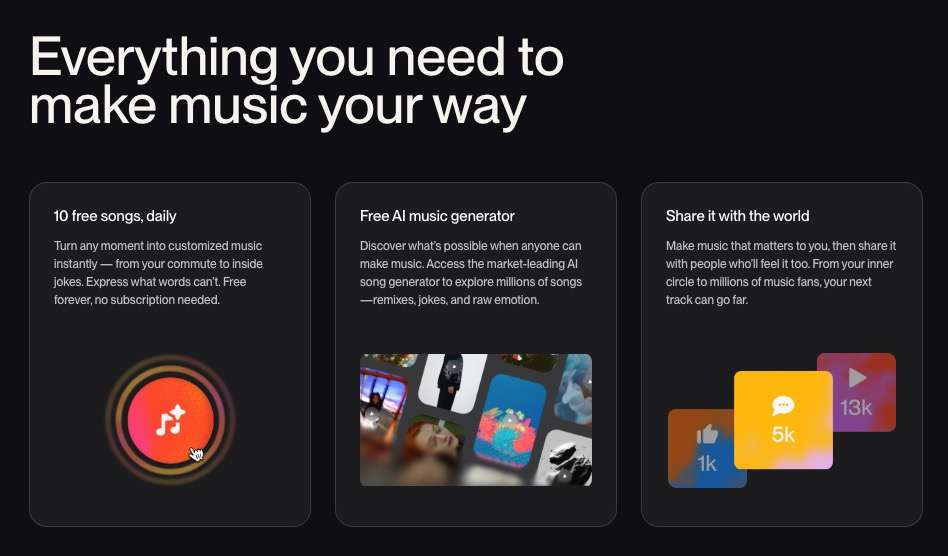
The second is a free tier you can actually use. At the time of writing, the free tier allows roughly ten songs a day, and you can generate, listen, and download without paying anything upfront. Multiple independent reviews confirm the audio quality is not throttled on the free tier — the limits are on volume, priority, and rights, not on how a single track sounds.
Vocal Quality
The third is vocal quality. Earlier AI music tools had a tell: vocals that sounded flat and robotic. Recent Suno versions produce vocals with breathing, dynamics, and phrasing that several reviewers report mistaking for human recordings on a first listen. It is not consistent across every genre, but the gap has narrowed enough that it changes what the tool is for.
Portability Across Devices
The fourth is portability. Web, iOS, and Android share one library, which makes Suno workable as a capture tool — you record the idea wherever it hits you and finish it wherever you have time.
Pricing and Commercial Rights
Free, Pro, and Premier at a Glance
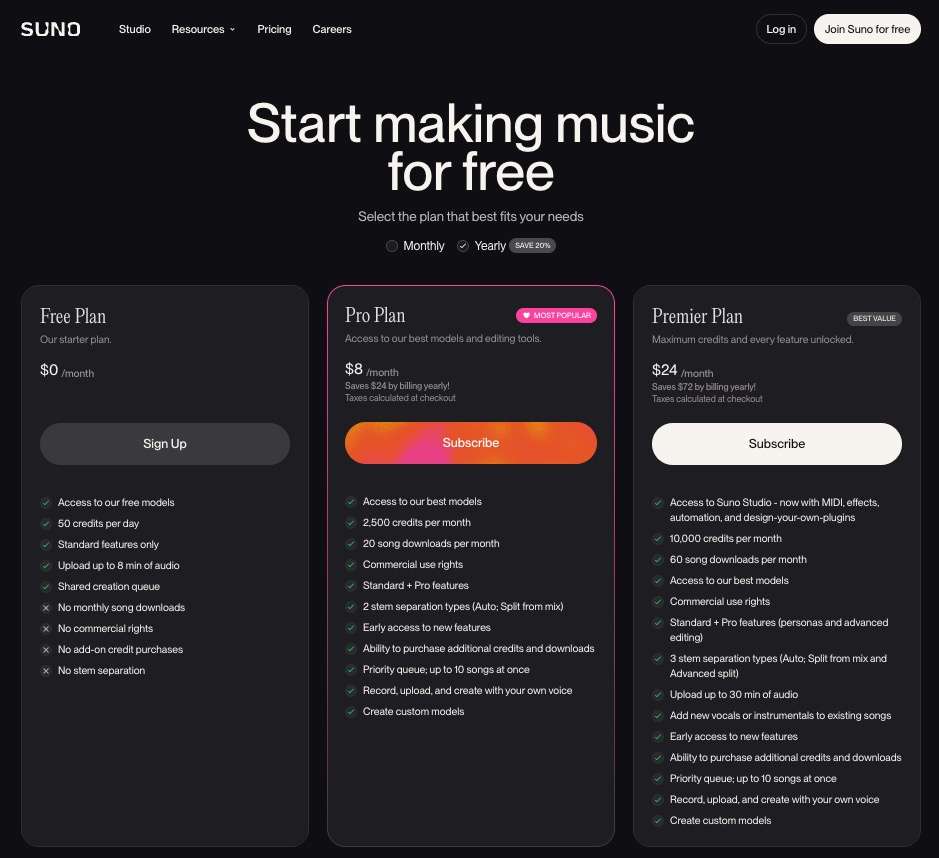
At the time of writing, the free tier covers roughly ten songs a day for non-commercial use. The Pro tier — about $10 a month, cheaper with annual billing at the time of writing — adds commercial-use rights for songs generated while you are subscribed, priority generation, stem separation, and audio uploads of up to eight minutes.
A higher Premier tier increases the allowance to around 2,000 songs a month and unlocks Suno Studio, a browser-based multitrack editor with MIDI export. These numbers have shifted several times, so check the current pricing on suno.com before you commit to anything.
The Rule Most Reviews Skip: Rights Attach at Generation
The rule most reviews skip: commercial rights attach at the moment of generation, not at the moment you upgrade. Songs made on the free tier stay non-commercial even if you move to a paid tier later, and Suno's own help documentation states that subscribing after the fact does not grant retroactive rights to older tracks. If commercial release matters to you, check the current pricing and terms before building a project on a free-tier song.
It is also worth knowing the backdrop. Suno's training data has been the subject of high-profile lawsuits from major record labels, and the company has since moved toward licensing agreements with parts of the music industry. That history does not make the tool unusable, but it is a reason to read the actual terms rather than assume any given track is cleared for release.
Real Limitations
An honest review needs the other side of the ledger, and Suno's limitations are structural rather than cosmetic.
Control Depth
The first is control depth. You steer the music with words, and words are a blunt instrument. You can ask for "indie folk, female vocals, melancholic," but you cannot specify a tempo change in the bridge, mute the hi-hats in the second chorus, or fix one muddy bass note.
Reviewers across the board describe the same dynamic: you give it a direction, it decides the execution. If you have a precise sound in your head, Suno will approximate it, not deliver it. When that precision matters more than speed, it is reasonable to test alternatives to the Suno AI music generator — we compared the leading six.
Emotional Depth
The second is emotional depth. Professional evaluations tend to land on the same critique: Suno's music reaches the average of human songwriting but rarely the top of it. Verse-to-chorus transitions can feel stiff, and the music often lacks the specific attitude that makes a song memorable.
The Endpoint: Suno Stops at Audio
The third is the endpoint. Suno finishes at audio — plus a cover image and short preview clips, which are useful for teasers but are not a music video. Every review that tests Suno as a full release workflow hits this wall: a finished song with no video is stuck in your library, because every major platform wants video.
Common Misconceptions
Three claims about Suno circulate widely, and all three are wrong in ways that cost people time or money.
Misconception 1: Free-Tier Songs Are Lower Quality
Misconception one: the free tier produces lower-quality songs. It does not. The free tier runs the same core models and is limited on volume, priority, and rights — not on the sound of an individual track.
Misconception 2: Upgrading Later Unlocks Commercial Rights
Misconception two: upgrading later unlocks commercial rights for songs you already made. Suno's terms say the opposite: rights attach at generation time, and a later upgrade is not retroactive. If a track matters commercially, regenerate it on a paid tier — the click-by-click process is covered in our guide on how to use the Suno AI music generator.
Misconception 3: Suno Can Make Your Music Video
Misconception three: Suno can make your music video. It can generate a static cover image and short clips through its preview features, but it does not produce a full, scene-based music video with synced visuals. For that you need a dedicated tool, which is the next section.
From a Suno Song to a Finished Music Video
A song alone cannot be published to TikTok, Shorts, or Reels — those platforms need a video, and hiring an editor for every track is not realistic at volume. This is the gap a dedicated AI music video generator fills, and it is where the workflow after Suno starts.
Turn Your Suno Song into a Music Video
Upload your finished track, describe the mood, and get a video in the aspect ratio each platform needs.
Try AI Music Video GeneratorHow the Handoff Works
The handoff is simple. Download the final version of your track — MP3 on the free tier, with WAV available on paid tiers at the time of writing. With Enkio's AI music video generator, the workflow then runs in three steps: upload the song and an image (or generate visuals in the tool), trim the audio to the section you want, and optionally add a prompt describing the mood, style, and camera movement. Enkio currently supports 720p and 1080p output across five aspect ratios, including 9:16 for TikTok and Shorts and 16:9 for YouTube. It runs on a credit model — as of September 2026, a monthly plan includes 3,000 credits, and you can check the current plans on Enkio's pricing page.
Whichever tool you use for the video step, plan for the rules of the destination platform. Platform policies on AI-generated content differ — check the platform's current guidelines before you publish, especially if monetization is the goal.
FAQ
These are the questions that come up most often around the Suno AI music generator, answered with the current facts and the caveats that matter.
Yes. The free tier allows roughly ten songs a day, and Suno's own FAQ confirms no payment details are required to start generating. The trade-off is that free-tier songs carry a non-commercial license. Allowances and terms have changed before, so check the current pricing on suno.com if the details matter for your project.
Only songs generated while you are on a paid tier carry commercial-use rights, and the rights lock in at the moment of generation — upgrading afterward does not apply retroactively to free-tier tracks. Suno's help documentation covers this directly; read it before monetizing anything, because the terms have evolved along with the company's licensing deals.
No. The free tier uses the same core models as the paid tiers. What changes is volume (a daily allowance instead of a larger one), generation priority during peak hours, and usage rights — not the sound of an individual track.
Not in the full sense. Suno produces the song, a cover image, and short video clips suitable for teasers, but it does not create a scene-based music video with synced visuals and multiple aspect ratios. A finished track needs a dedicated music video tool to become a publishable video.
Three things: the audio file (downloaded from your Suno library), a visual direction (an image you own or a style description), and a dedicated tool such as Enkio's AI music video generator to sync visuals to the track and export in the right aspect ratio for each platform. The whole pass takes minutes, not hours, because the song's structure is already finished.
Conclusion
Suno earns its reputation as the fastest path from a text idea to a complete song, and the free tier is a real product, not a demo. The limits are just as clear: you cannot steer the music at note level, and the platform stops at audio. If you already have a finished track — from Suno or anywhere else — Enkio's AI music video generator takes it the rest of the way: upload the song, describe the mood, and generate a video in the aspect ratio each platform needs. If you need frame-accurate control over every cut, a traditional editor still gives more precision; AI MV tools trade that control for speed.