





Before You Start: Account, Credits, and Rights
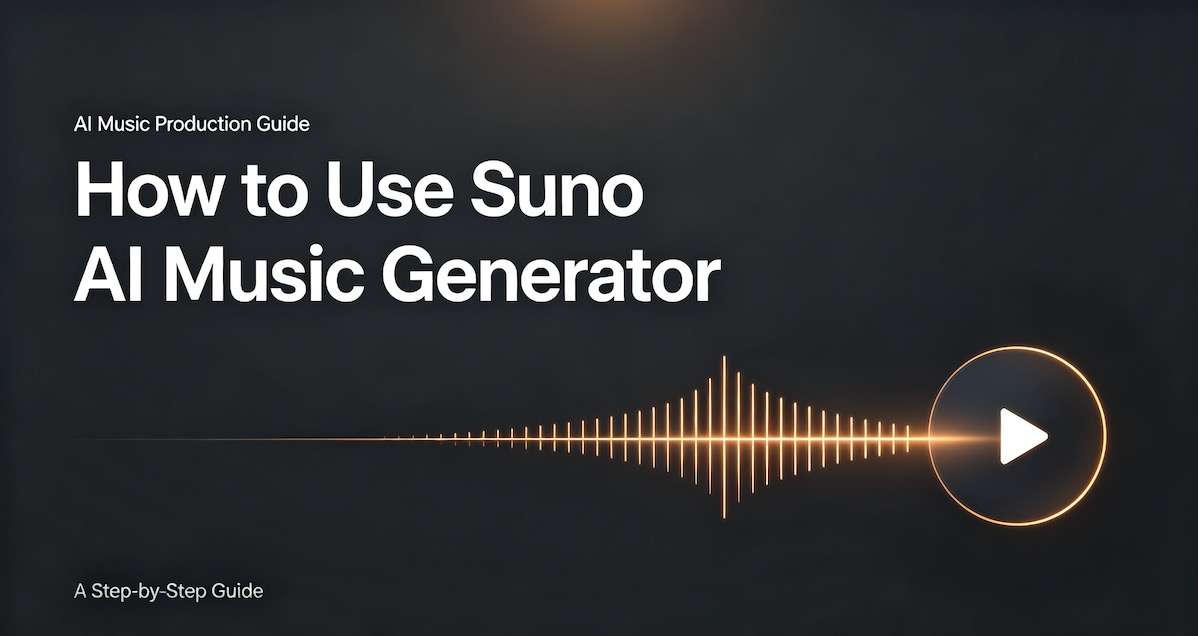
Suno keeps onboarding short: a sign-in, a daily budget of generations, and a rights model that changes depending on what you pay for. Sorting those three out first stops you from burning credits on the wrong idea — or publishing a track you are not yet allowed to use commercially.
What You Need Ready
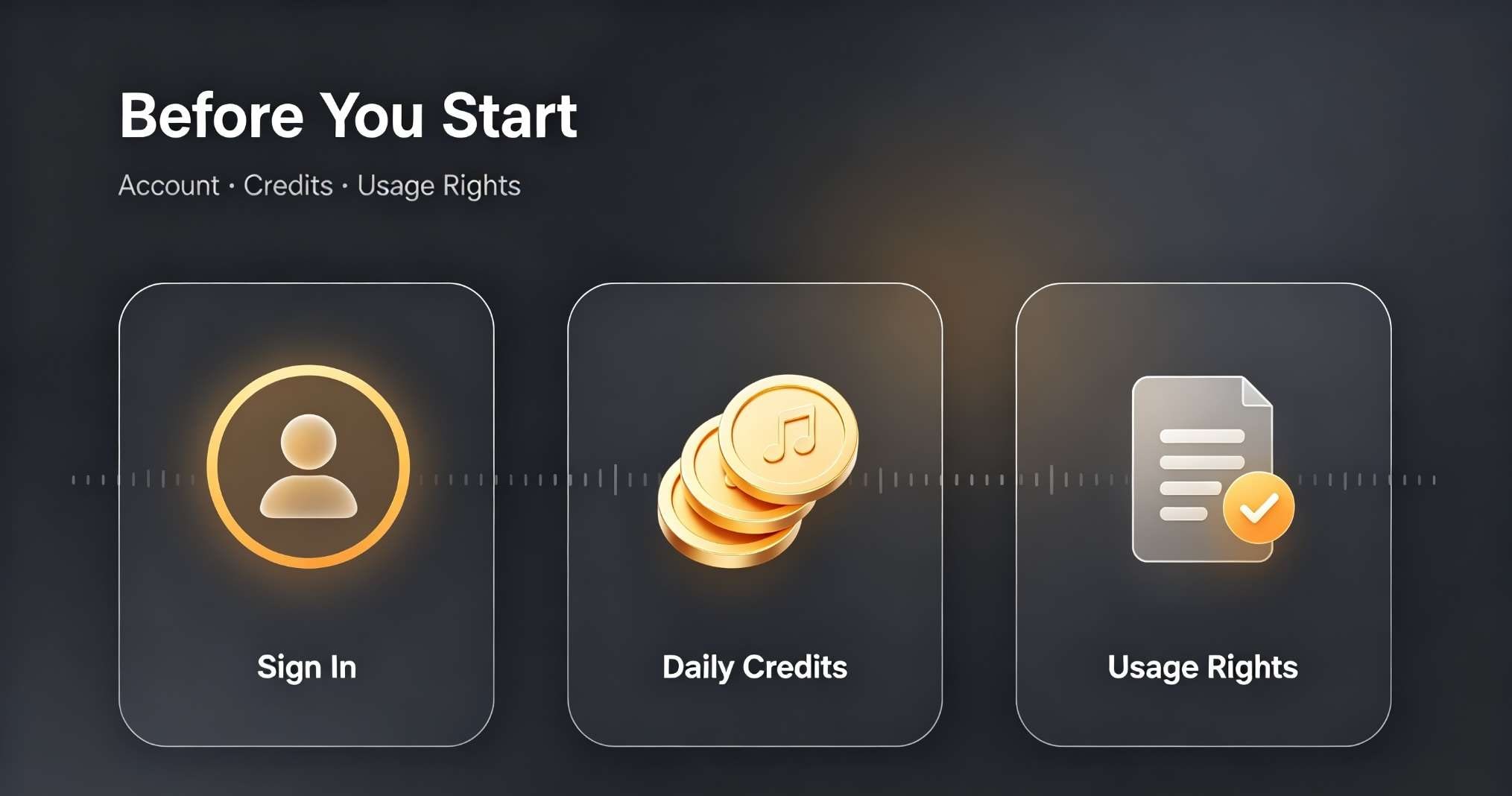
An account is the only hard requirement. You can sign in with a Google or Microsoft account or an email address, and no instrument, no studio and no theory knowledge is involved. Beyond that, bring three things: a genre or mood in mind, your own lyrics if you already have them, and one moment you want the song to hit hardest — a chorus, a drop, a specific line. If you plan to turn the finished track into a video later, bring one image as well, because the visual step needs its own starting point.
How Free Credits Work
Suno runs on credits rather than on a fixed number of free songs. Each generation returns two takes, and every re-roll spends credits again, so the practical limit is how quickly you decide what you like. The daily allowance is what we see people hit first: as of September 2026, third-party guides put the free tier at roughly ten songs a day with shorter track lengths; those numbers change, so check Suno's own pricing page before you plan a project around them.
A Quick Word on Usage Rights
Free-tier output is generally reported as non-commercial, with commercial use sitting behind the paid tiers. That single distinction decides whether a song can go into a monetized video or an ad. Before you build anything around a track, read the current terms, and if you want the fuller picture of where the platform is strong and where it stops, our full review of Suno covers the trade-offs in detail.
How to Generate Your First Song
The entire generation loop lives on a single page, and in the tutorials we compared, the same four controls decide the result: which mode you pick, how you describe the style, whether you supply lyrics, and what you do with the two takes you get back.
| Simple Mode | Custom Mode | |
|---|---|---|
| What you type | One line describing the song | Your own lyrics, plus a shorter style description |
| Who decides the structure | Suno picks melody, lyrics and arrangement | You decide lyrics, section order and tags |
| Section tags | Not needed | [Verse], [Chorus], [Bridge], [Outro] |
| Best for | A fast first draft or a style experiment | Songs with a fixed story, hook or language |
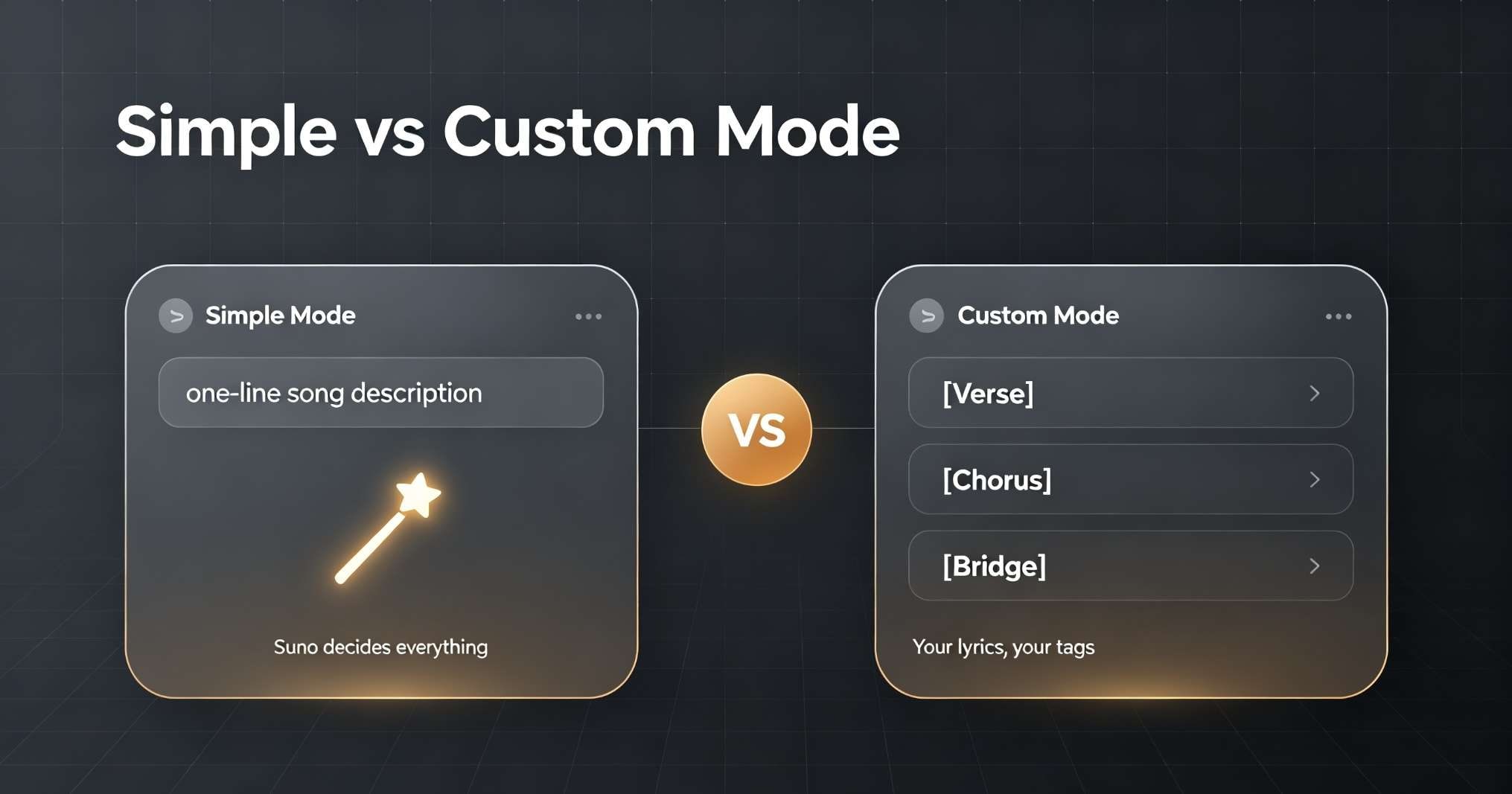
Most people move in one direction: start in Simple Mode to hear the direction, then switch to Custom Mode once the idea deserves precision. Neither mode is the "advanced" one — they answer different questions.
Step 1: Open the Create Page and Pick a Mode
Sign in, then open the Create panel on the left. This is the only screen you need for the next four steps. Choose Simple if you want to hear a direction quickly, or Custom if the lyrics already exist. If you are unsure, start Simple: a rough take at this stage tells you more than a careful one.
Step 2: Write Your Style Prompt
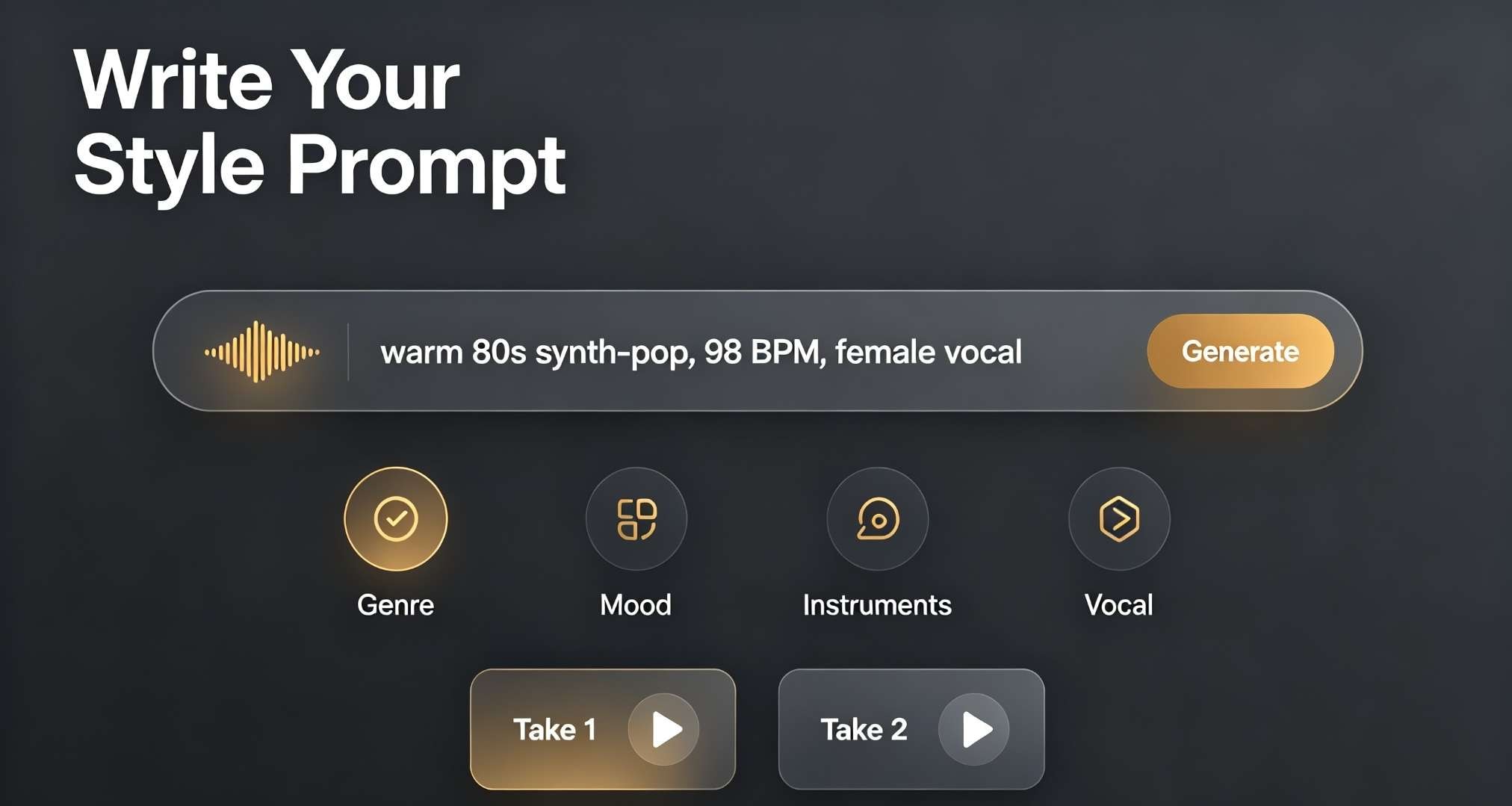
The style field describes the sound, not the story. Four ingredients are enough: genre, mood, instrumentation, and vocal character. A prompt such as "warm 80s synth-pop, 98 BPM, close-mic female vocal, bright singalong chorus" gives Suno more to work with than "a nice pop song", because every adjective points at a decision. Add an era or a tempo when the difference matters, and keep the field focused — a prompt that lists eight styles usually produces something that fits none of them. Note that real band and artist names are not usable as style shortcuts; describe the sound instead.
Step 3: Add Lyrics and Structure Tags
In Simple Mode Suno writes the lyrics. In Custom Mode you paste your own and mark the sections with tags — [Verse], [Chorus], [Bridge], [Outro] — which tell the model where the arrangement should change. Keep the lines short and rhythmic, because long lines get compressed to fit the bar. Punctuation shapes phrasing, so a comma buys you a pause, and repeated vowels stretch a note. If a section keeps landing wrong, shorten it before adding more words.
Step 4: Generate and Compare the Two Takes
Every generation returns two versions of the same song. Listen to the chorus of each one first, since that is the part listeners will judge, then decide: keep, or re-roll. Re-rolling costs another generation, so listen properly before you spend it. When both takes share the same flaw, the prompt is the problem, not the luck of the draw — go back to Step 2 rather than regenerating the same request.
How to Refine a Draft Track
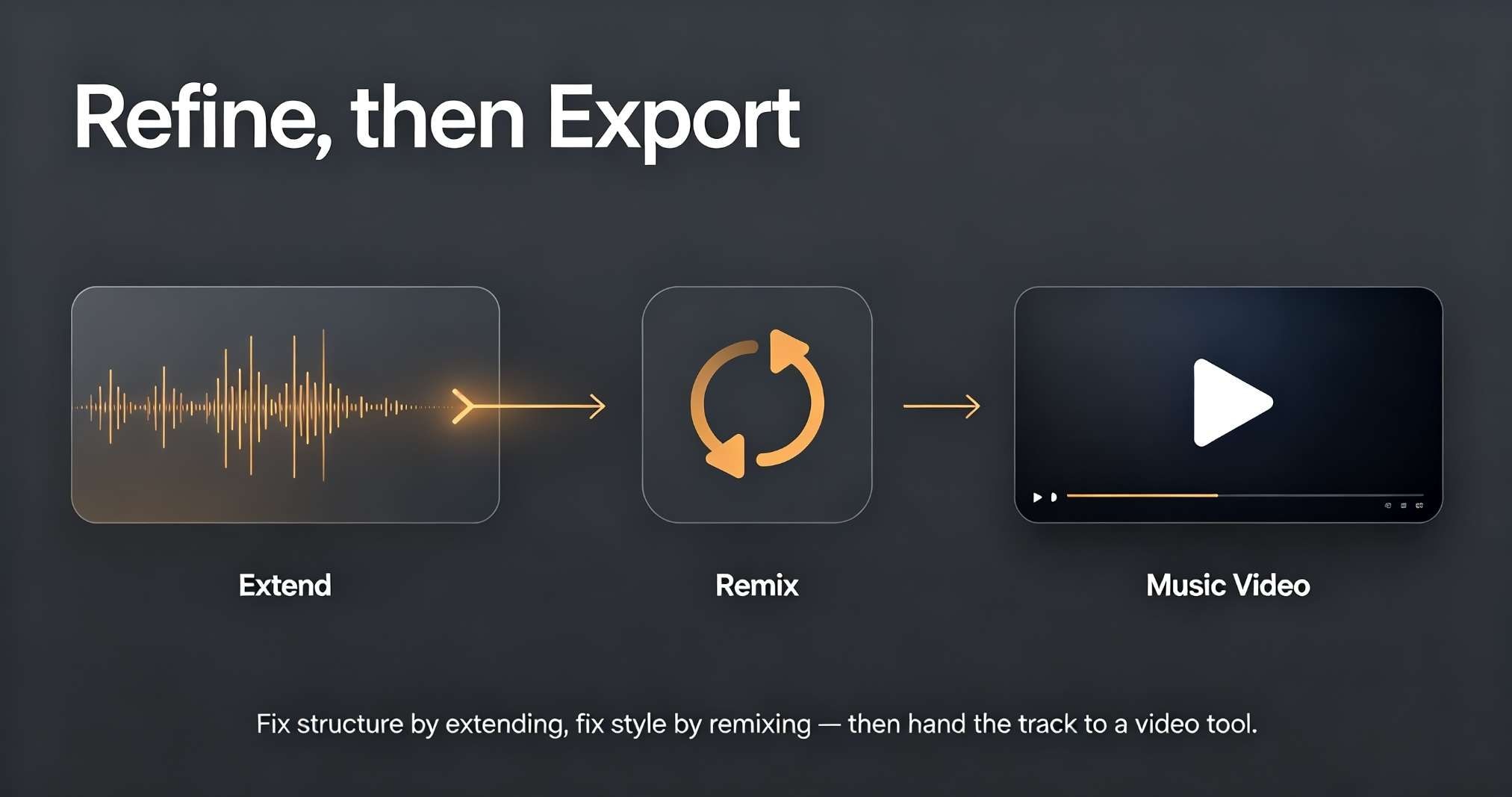
A first pass rarely gives you a finished song, and the refinement tools are where most of the usable output comes from. The rule of thumb: fix structure by extending, fix style by remixing, and only re-roll when the whole take is wrong.
Extend a Track That Ends Too Soon
Extend picks up from a point in the existing audio and continues writing. Set the continuation point at a section boundary rather than mid-phrase, add lyrics for the next section, and generate one part at a time — a verse or a chorus per pass. Working in smaller pieces produces cleaner transitions than asking for four more minutes in one request.
Remix Into a Different Style
Remix keeps the structure and re-interprets the arrangement, which makes it the fastest way to test whether a hook works outside its original genre. A chorus that feels flat in a synth-pop take can land differently in a slower arrangement. Use it as a comparison tool, not as a fix for a weak melody — a remix will not repair a hook that was never there.
Re-roll vs Edit: Which to Do When
Two questions decide it, and in the workflows we reviewed this order is what keeps credits from disappearing. Is the structure right? If not, re-roll with a rewritten prompt. Is the structure right but one section weak? Then extend or regenerate that section, and keep the parts that worked. Following this order saves credits, because each re-roll throws away everything you liked along with everything you did not.
How to Export Your Song and Use It
Once a take lands, the remaining decisions are about format and permission. Both matter more than most creators expect, because a good track that cannot legally go where you want it is an unfinished project.
Download Options and What You Get
Suno lets you download the audio file, publish the track to your profile, and share a link — third-party guides commonly describe MP3 as the standard download format. Paid tiers add longer tracks and higher-quality exports; the exact specs sit on Suno's pricing page rather than in its interface. If the song is destined for an edit, download it before you iterate further, since later changes overwrite your reference point.
What the Rights Mean for Publishing
The free tier is generally reported as non-commercial, which rules out ads, sponsored content and monetized uploads; paid tiers are where commercial use becomes available. Before publishing anywhere that earns money, check the current terms and the platform's own rules. Platform policies on AI-generated content differ — check the platform's current guidelines, because disclosure requirements change faster than tutorials do.
From Song to Video: The Step Suno Does Not Cover
Suno stops at audio. There is no timeline, no scene generation and no export in a vertical format — which is exactly the gap that shows up the moment a finished song needs a visual. This is where an AI music video generator takes over. Enkio can generate a song from a text description and accept your own lyrics, then turn a track into a complete music video: upload the audio, add one image or a prompt describing the visual direction, choose the aspect ratio the platform needs, and generate. The song keeps its original mix; the visual work happens in a separate step, so nothing you made in Suno gets discarded.
Common Mistakes That Waste Your Credits
In the guides and forum threads we read, most lost credits come from four repeatable errors rather than from bad luck. Each one has a cheap fix that takes less time than a re-roll.
Mistake 1: Writing a Vague Prompt
"A sad song" leaves every decision to the model, and the default answer is usually generic. Name the genre, the tempo, the instrument carrying the melody, and the vocal type. Specificity is not a stylistic preference here; it is the only steering wheel you have.
Mistake 2: Overloading the Style Field
The opposite failure looks like diligence: eight genres, five moods and a list of instruments in one line. The model averages them into mush. Pick one primary style and at most one influence, then let the lyrics carry the nuance.
Mistake 3: Ignoring Section Structure
Without tags, a song tends to drift: verses blur into choruses and the hook never announces itself. Marking [Verse], [Chorus] and [Bridge] costs ten seconds and gives the arrangement a shape you can then adjust deliberately.
Mistake 4: Assuming Free-Tier Songs Are Cleared for Commercial Use
This is the expensive one. Discovering after publication that a track cannot be used commercially means a takedown, or a rebuild of the project around different audio. Decide the song's destination before you generate, and if the rights situation is what pushed you to look around in the first place, the same question applies to every tool — Suno alternatives worth testing are compared on that basis, among others.
Frequently asked questions
These are the questions that come up most often once the first song is finished — most of them are about credits, rights and what happens after the export.
Is Suno free to use?
There is a free tier with a daily credit allowance, and paid tiers add more credits, longer tracks and commercial rights. As of September 2026, third-party guides describe the free tier as limited to a small number of songs per day — check Suno's pricing page for current numbers.
Can I use Suno songs commercially?
Commercial use is generally tied to the paid tiers, while free-tier output is reported as non-commercial. Check the current terms before you publish a track in anything that earns money, because the answer depends on your plan, not on the song.
How long does it take to generate a song?
A generation typically returns two takes in roughly a minute, depending on load. The waiting is rarely the bottleneck; deciding which take to keep, and what to change, is where the time goes.
Can Suno make a music video?
No. Suno produces audio only, with no timeline or video export. Turning a finished song into a music video is a separate step, handled by a video tool that accepts the audio file as its starting point.
What is the difference between Simple and Custom mode?
Simple Mode takes a one-line description and decides the melody, lyrics and structure for you. Custom Mode hands those decisions back: you supply the lyrics, tag the sections, and describe the style in a shorter field. Simple is faster for a first draft; Custom is where a specific song gets built.
Conclusion
Using the Suno AI music generator comes down to four controls and one habit: pick the mode that matches what you already know, describe the sound rather than the story, tag the sections, and compare the two takes before spending another credit. Do those, and most of your generations become usable instead of experimental.
One honest caveat: if your goal is a specific arrangement with note-level control, prompt-driven generation will feel imprecise, and a DAW with a session musician still wins — Suno trades that precision for speed, and the trade is worth it only when the speed matters. When the song is done, the next decision is what it looks like.
Your song is done. Now give it a video.
Upload the track, describe the mood, and Enkio generates a complete music video in the format each platform needs.